
Last updated November 23, 2026
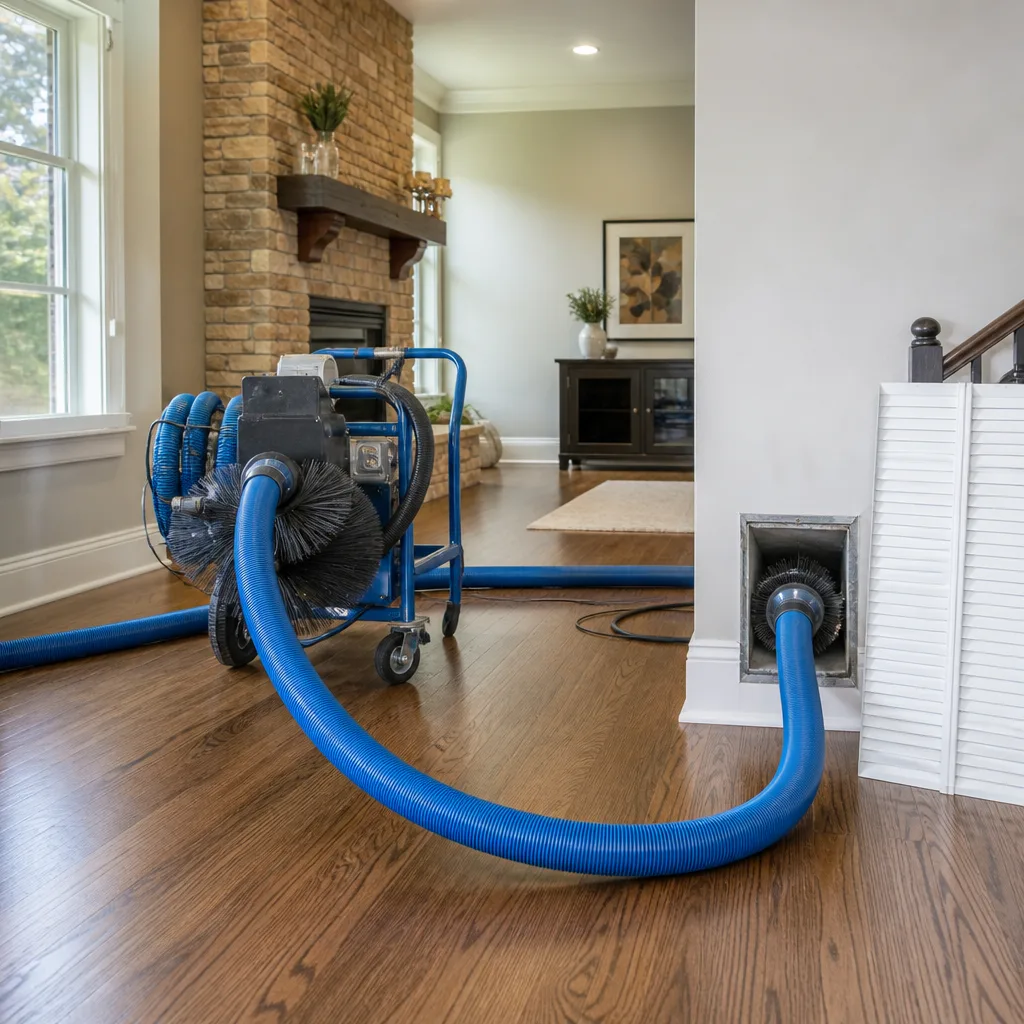 Whole-home duct cleaning
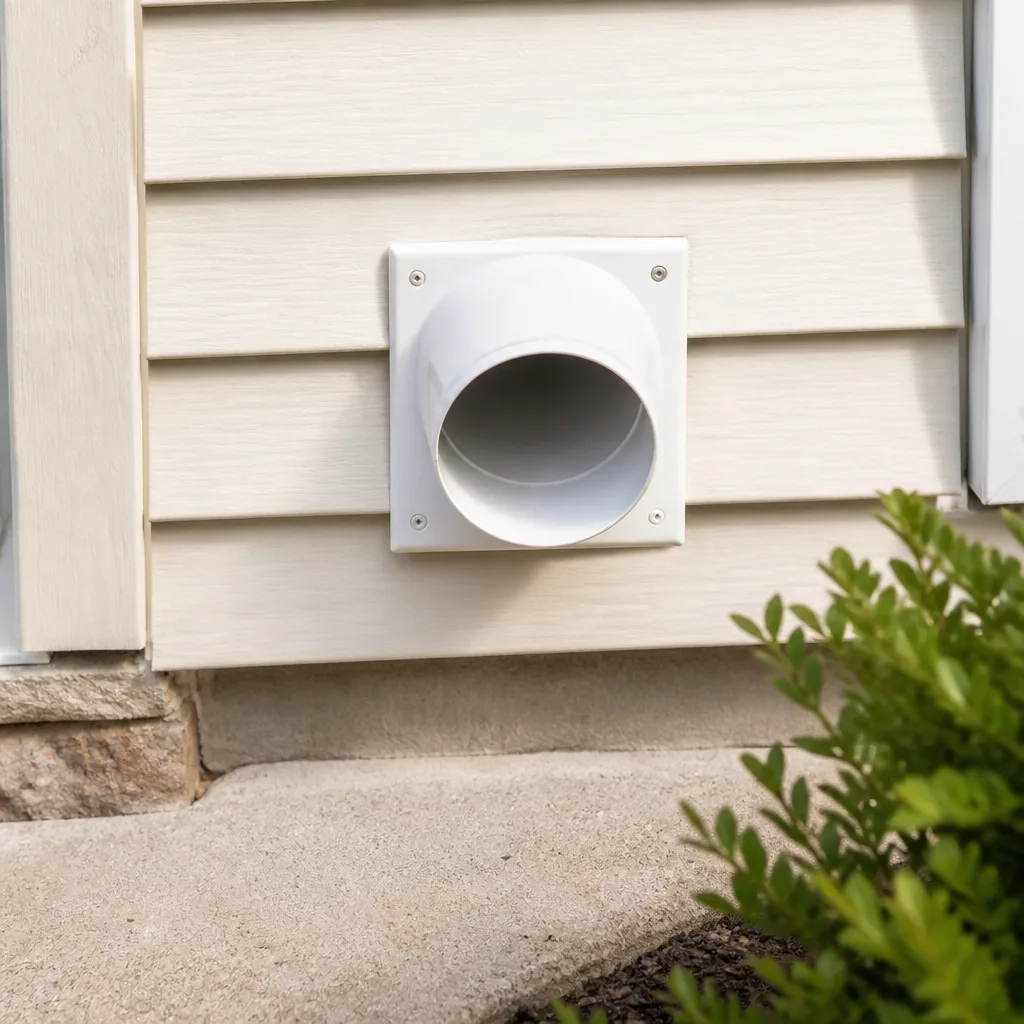 Dryer vent cleaning
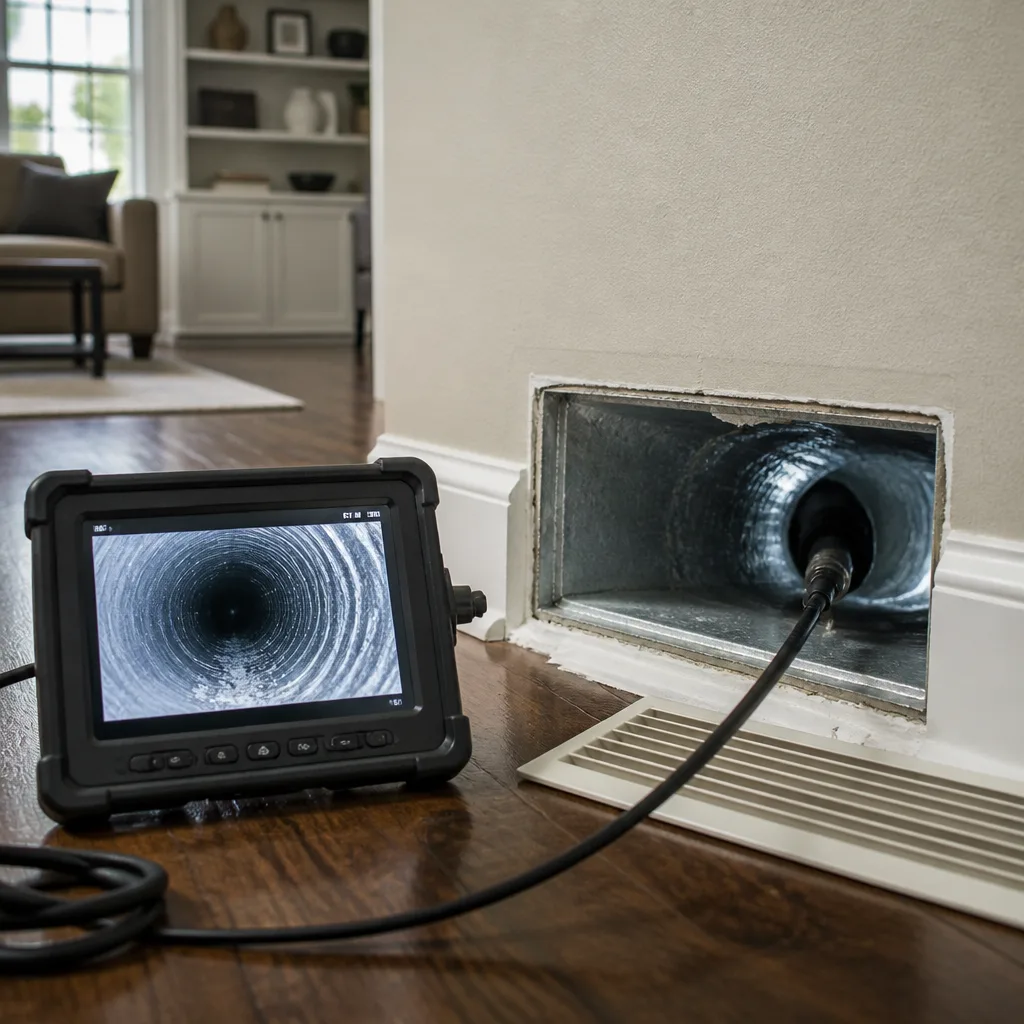 Camera inspection
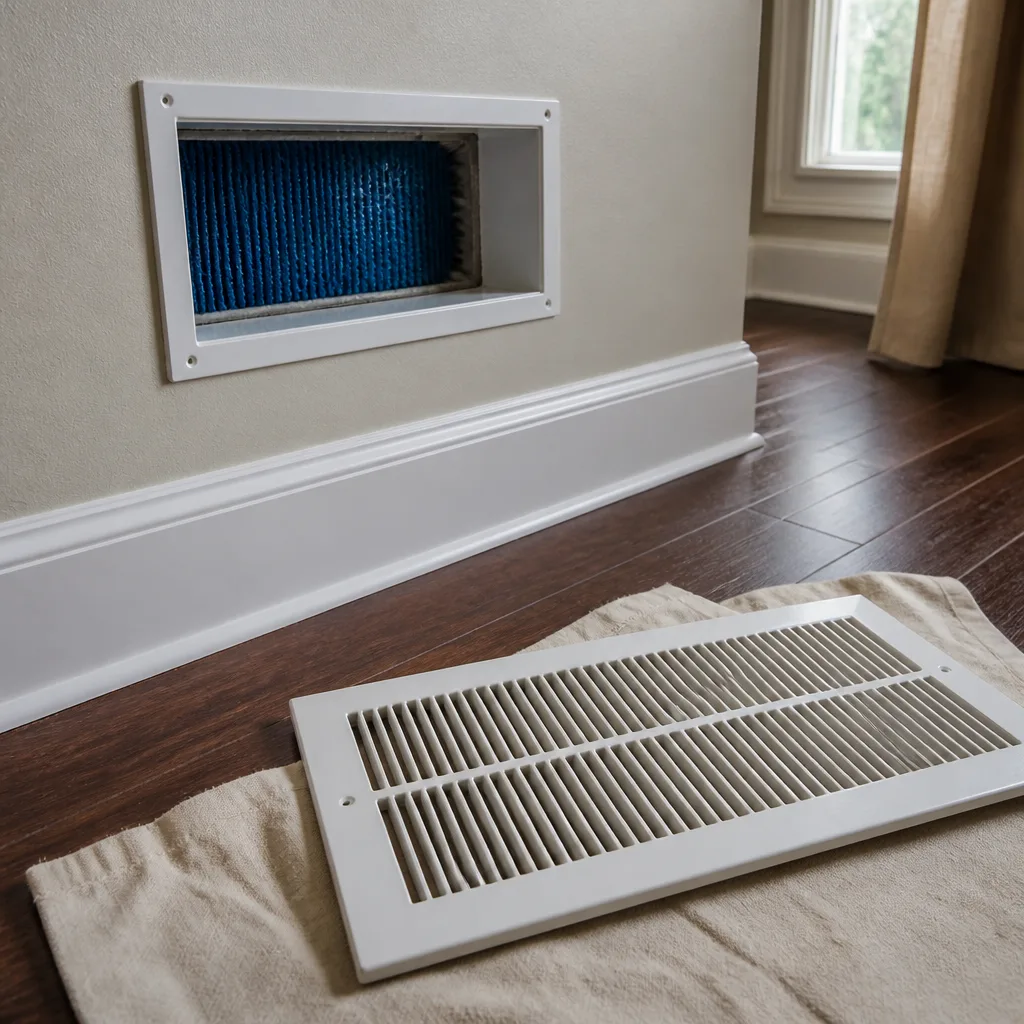 Sanitizing & deodorizing
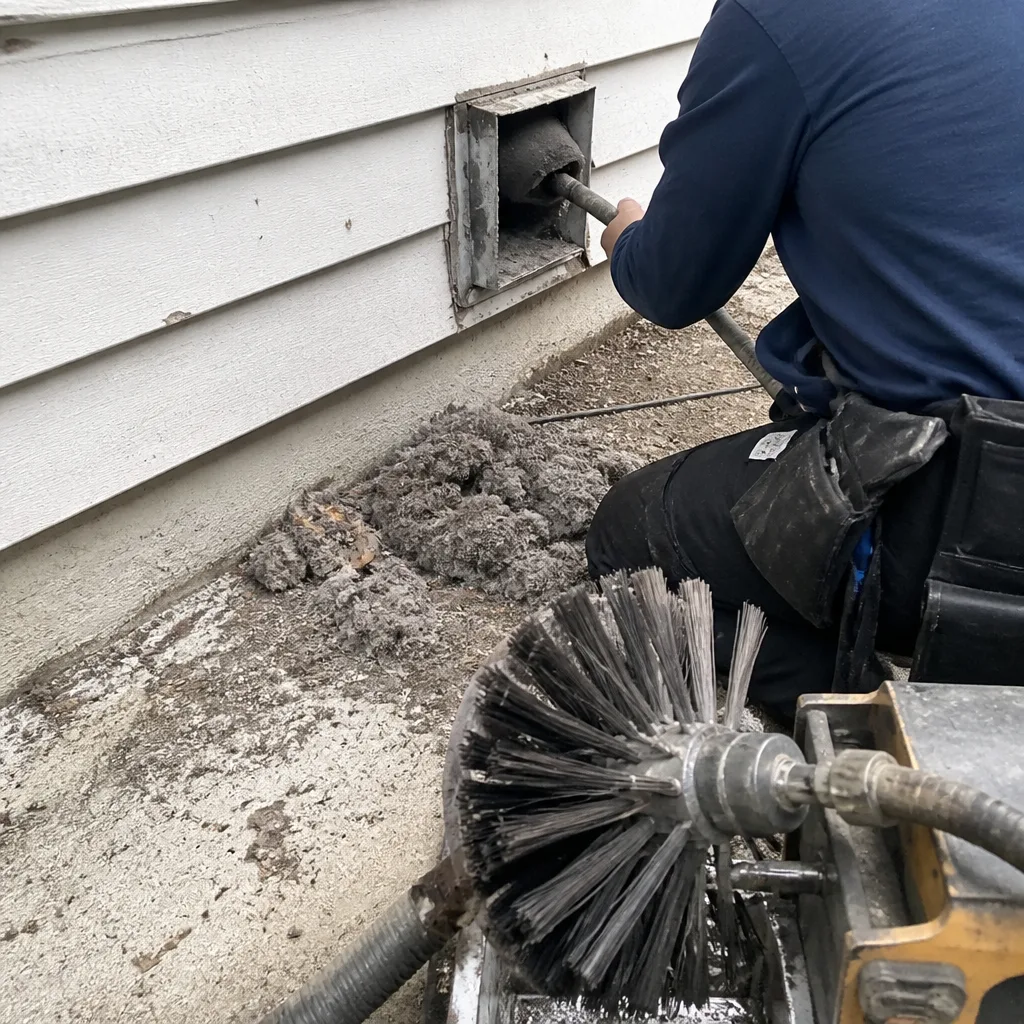
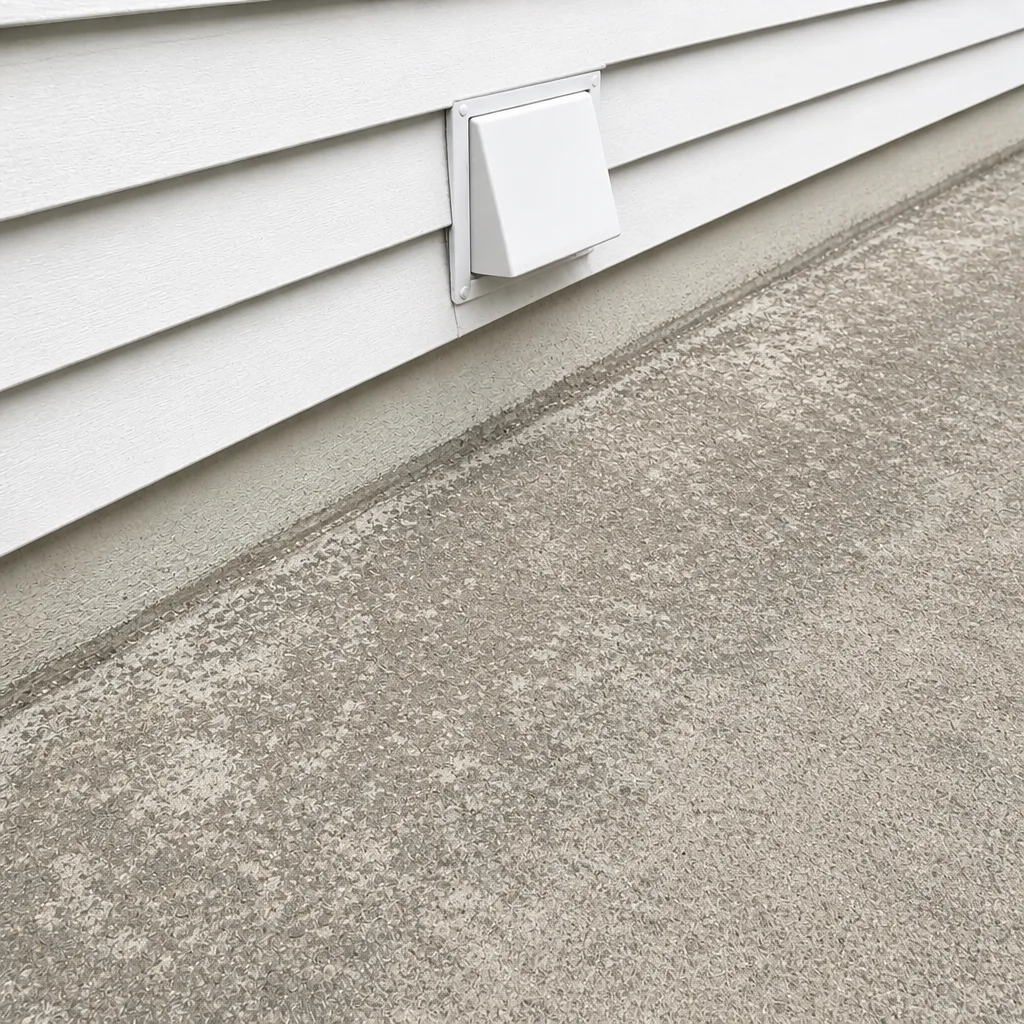
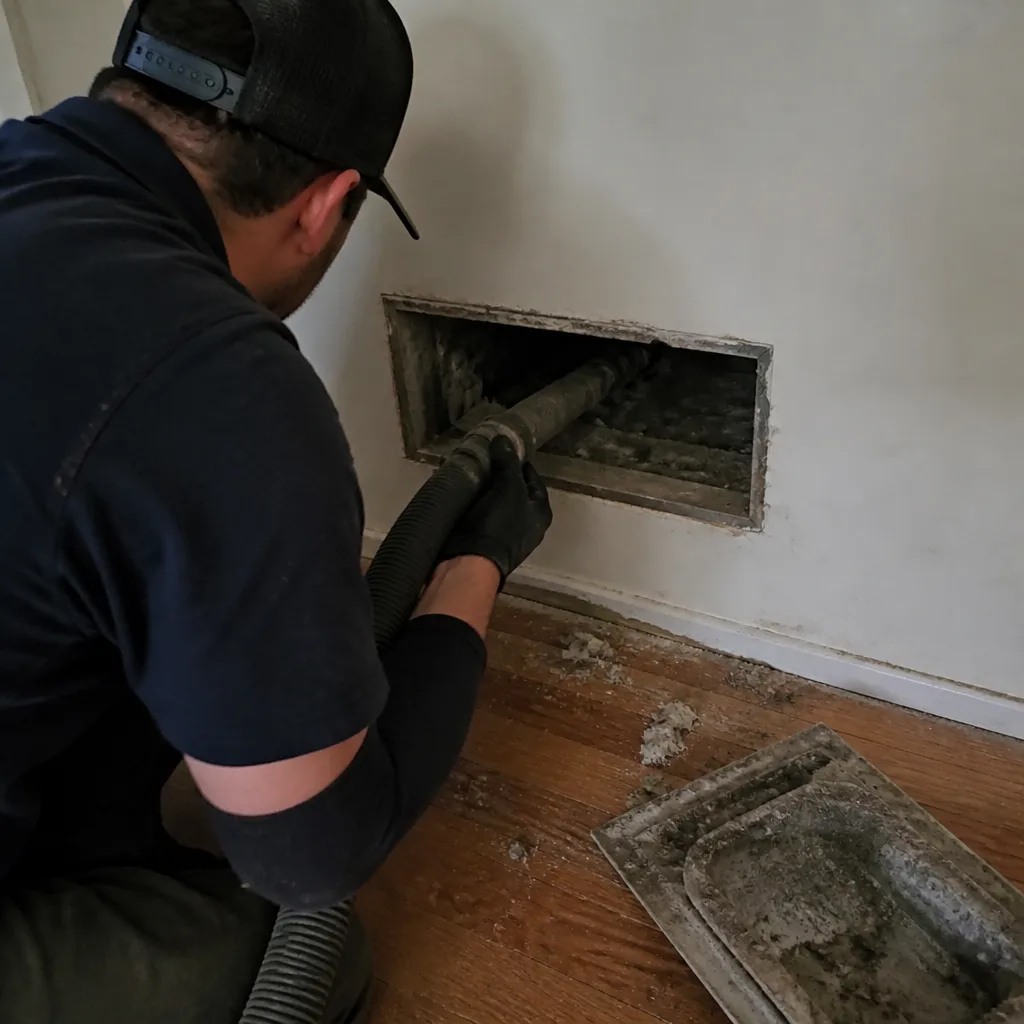
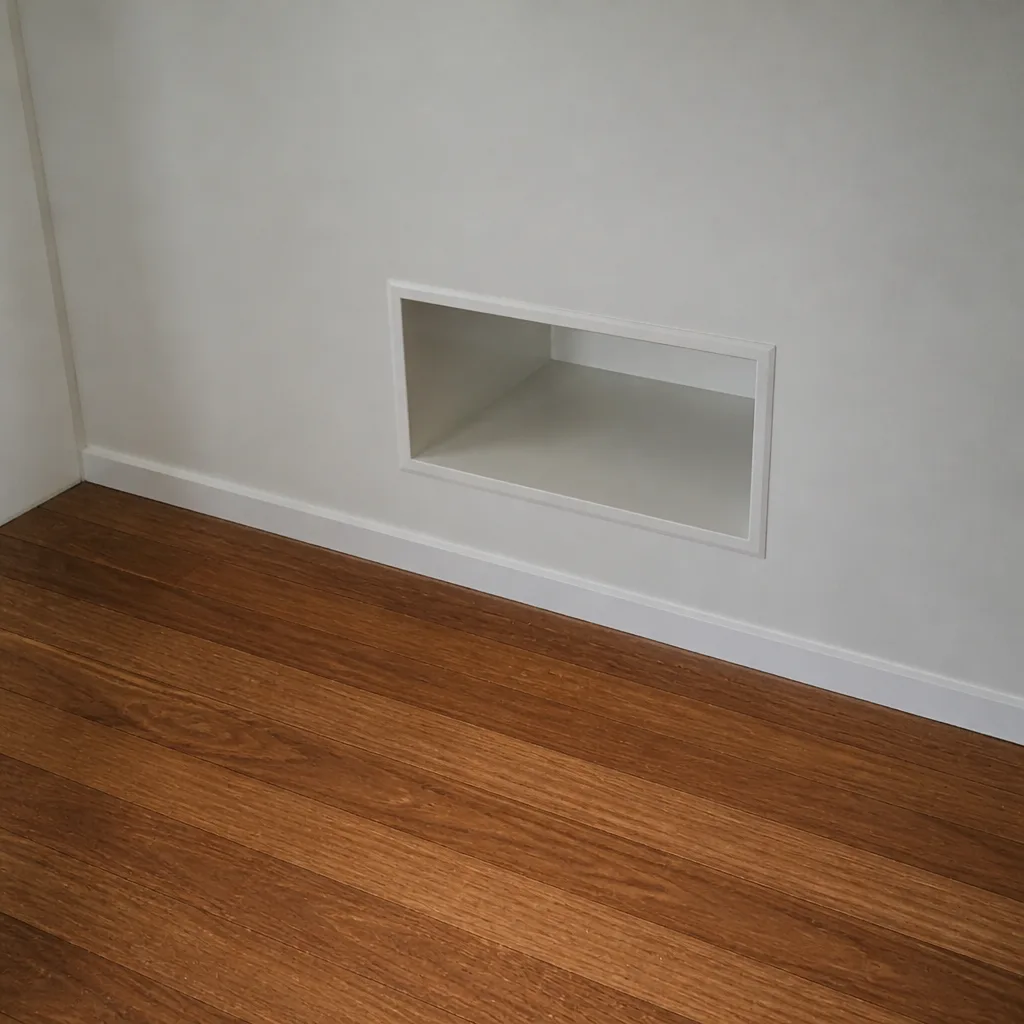
Whole-system duct and dryer vent check with before-and-after photos - you see exactly what came out of your vents
That "$99 whole-house special" is a bait ad - the real number appears once they are in your hallway, or the "clean" is a shop-vac at the register. We photograph the inside of your ducts before and after instead.
Air Duct Cleaning Maintenance Checklist for Pleasant Grove Homeowners
Most homeowners replace their filter on schedule and assume their duct system is fine. Here’s the part that gets missed: filter condition is the last indicator of a problem, not the first. By the time a filter loads up faster than it should, the dust has already traveled through the return path, past a bad joint, or off a contaminated coil. A maintenance checklist only earns its keep when it monitors the system backward from that end point. This guide gives you that protocol for Pleasant Grove: what to check monthly, what to check seasonally, what to log, and which warning signs mean you stop checking and start calling.
Quick Answer
A working air duct maintenance checklist for a Pleasant Grove home combines monthly visual checks at registers and return grilles, seasonal checks tied to Utah’s dust and smoke calendar, and one professional whole-system cleaning and inspection per year to two years depending on conditions. Log every check so filter loading rates and recurring dust patterns become visible over time. Documentation is what separates maintenance from guesswork.
Styles & brands we work with
- Whole-home duct cleaning
- Dryer vent cleaning
- Camera inspection
- Sanitizing & deodorizing
Table of Contents
- What Should You Check Monthly?
- What Can You See at Registers and Return Grilles?
- How Do You Track Filter Loading Rate as a Diagnostic?
- Which Utah Seasonal Events Should Trigger an Off-Cycle Check?
- What Belongs on the Annual Professional Checklist?
- How Do You Inspect Accessible Duct Joints?
- What Should a Duct System Log Record?
- Common Mistakes to Avoid
What Should You Check Monthly?
The monthly pass takes about ten minutes and requires no tools. It’s a visual and sensory sweep, not a cleaning session. The goal is to catch change: dust where there wasn’t dust, a rattle that wasn’t there, a register that blows weaker than it did in spring. In Pleasant Grove, where the valley floor collects wind-blown dust through the dry months, month-to-month comparison is the only reliable way to tell normal seasonal loading from a system problem.
- Filter face: Look at the intake side, not the downstream side. Note how much of the surface is gray versus white.
- Register airflow: Hold a hand roughly a foot from each supply register in the same room. The point isn’t measuring airflow, it’s comparing one register to the others on the same branch.
- Register dust rings: Check the ceiling or wall around each grille for a dark halo. A developing ring means air is escaping past the frame.
- Return grille surface: The large return is a dust magnet by design. A visible coat after a month of light use is a data point worth logging.
- Sound: Listen for whistling at one register, popping in the walls, or a rattle at the air handler cabinet.
- Smell: A musty or dusty odor when the system starts is a signal. So is a smell you can only detect in one room.
Write down what you find each month, even if the answer is “nothing changed.” A checklist that isn’t recorded is just a habit. Three months of written observations will tell you more about your duct system than any single inspection. If two or more of these checks start trending the wrong direction across consecutive months, that’s your cue to bring in a professional assessment rather than wait for the annual cleaning.
What Can You See at Registers and Return Grilles?
Registers and return grilles are the only parts of your duct system you can inspect without opening anything, which makes them the best free diagnostic surface in the house. What you’re looking for is inconsistency. Uniform light dust across every register says the system is behaving normally. Heavy dust at some registers and clean ones at others is a story about pressure, leakage, or a compromised branch line.
- Compare grilles room to room: The registers closest to the air handler usually stay cleaner; the farthest ones often collect more dust if static pressure drops along the run.
- Look up into the boot: With a flashlight, aim past the grille into the transition duct. A visible dust film on the metal is normal. A fluffy buildup or debris stuck to the walls isn’t.
- Check the return grille filter slot: Many Pleasant Grove homes have a filter grille rather than a filter at the air handler. Make sure the filter is seated flat and the frame gasket hasn’t fallen away.
- Inspect for streaks: Dark streaks radiating out from a grille frame mean air is being pulled through the drywall gap instead of the duct.
- Watch for rust or water staining: Even a faint brown edge on a ceiling grille points to condensation issues upstream, usually in the attic run.
If a return grille is pulling noticeably harder than the supplies can deliver, the imbalance itself loads the filter faster and pulls dust from every gap in the system. This is exactly the kind of finding that shows up early at the grille and late in the filter. Our team sees these imbalances as a matter of course, and they’re a common reason Pleasant Grove homeowners end up scheduling air duct cleaning before their planned interval.
How Do You Track Filter Loading Rate as a Diagnostic?
Filter loading rate is the single most useful number you can track at home, and almost nobody does. A system pulling clean air through tight ducts should take a predictable amount of time to load a filter. When the same filter loads in half the usual time, that isn’t a filter problem; it’s a signal that extra dust is entering the return path somewhere upstream. Tracking the rate turns your filter schedule into an early-warning system.
- Mark the install date: Write it on the filter edge in pencil before seating it.
- Pick a monthly check day: The same day as your monthly visual pass keeps the habit anchored.
- Rate the loading: Use a simple three-level scale: light (dust visible but surface still light-colored), moderate (gray coat, some pleats darkening), heavy (dark surface, filter edge bowed or the frame struggling to hold it).
- Record the days when the rating changes: The day it hits “moderate” is your baseline. If that interval shortens from two months to three weeks, that change is your finding.
- Check MERV compatibility: A higher-MERV filter loads faster than a lower one. If you changed filter specs, reset your baseline with the new rating before drawing conclusions.
- Compare seasons: Expect faster loading in dry, windy spring months in the valley and slower loading in the settled weeks of mid-summer.
A steadily speeding loading rate with no filter change means dust is bypassing the filter somewhere. Common causes: a filter frame that doesn’t seal, a disconnected flex duct in the attic, a compromised return plenum, or a coil that’s packed with debris. Honeywell and Aprilaire filter cabinets are designed to seal properly against the return, and upgrading to a properly sized cabinet is often more effective than adding more MERV to a leaky slot. When the rate is climbing faster than the seasonal pattern explains, the answer is to inspect the full duct path, not to buy filters more often.
Which Utah Seasonal Events Should Trigger an Off-Cycle Check?
The Pleasant Grove calendar isn’t the same as a generic checklist’s calendar. The Wasatch Front has a specific sequence of dust and smoke events, and each one leaves a signature in the duct system. These are the triggers we recommend to homeowners who want to run checks off-schedule rather than by the written calendar on the wall. A seasonal trigger is a reason to look, not a reason to panic.
| Season | Trigger Event | Check To Run |
|---|---|---|
| Spring (Mar-May) | Inversion layer smog in the valley | Filter face rating, return grille dust, register dust rings |
| Summer (Jun-Aug) | Wildfire smoke events from regional fires | Filter loading, indoor smell during system start, air quality device readings |
| Fall (Sep-Oct) | Harvest dust and high winds | Outdoor intake screens, filter loading, register airflow comparison |
| Fall/Winter (Oct-Nov) | Furnace startup after summer idle | Burn smell check, visible dust puffing from registers, cabinet filter seal |
| Winter (Dec-Feb) | Closed-window heating season | Humidity check, condensation stains, filter rate under full heating load |
| Any (post-renovation) | Drywall, wood floor, or cabinet work | Full visual pass plus filter replacement within days of finish |
The spring inversion and the summer smoke plumes hit the outdoor air intake differently than the source of dust that comes from within. Inversions concentrate pollutants close to the ground; smoke events push fine particulate into everything the system draws in. Neither demands a cleaning every time, but both deserve a check within a week or two. Harvest season in Pleasant Grove brings fine dust straight off the fields and roads, and furnace startup in the fall is the moment when any dust that settled in the ducts over summer becomes airborne in the house.
One more trigger that doesn’t appear on the calendar: a home purchase, an HVAC replacement, or a major repair. Any of those resets your baseline, and it’s worth doing a full visual pass and a documented starting point rather than carrying forward old assumptions about the system.
What Belongs on the Annual Professional Checklist?
Homeowner checks catch change; professional checks catch what home inspectors can’t see. Once a year, or once every two years in a home with a well-maintained system and no complicating conditions, you want someone inside the duct path with the right equipment. This isn’t the place to hand your system to a shop-vac crew with a coupon. Rotary brush and vacuum equipment agitate the walls of the duct while extracting debris, and that contact is what actually removes the layer that’s stuck to the metal.
- Whole-system inspection: Registers, boots, main trunk, branch lines, return path, and the air handler cabinet.
- Mechanical cleaning of the duct path: Rotary brush contact along the interior of each run, with continuous vacuum extraction pulling debris out of the system instead of into the room.
- Coil and drain pan inspection: Dust on the evaporator coil reduces airflow and grows a biological film over time.
- Containment and HEPA filtration: The cleaning area should be under negative pressure so nothing escapes into the house. Abatement Technologies filtration equipment is the standard we hold ourselves to, and it’s the same class of equipment used on mold and restoration jobs.
- Joint seal check: Every accessible joint, boot connection, and plenum seam gets checked. Any gap found gets sealed before the crew leaves.
- Dryer vent: A separate system that deserves its own annual check. Lint accumulation in the vent is a common residential fire cause, so it isn’t an add-on. Schedule dryer vent cleaning as part of your home maintenance calendar regardless of what your ducts look like.
- Report and recommendations: A written summary of what was found, what was cleaned, and what needs attention next.
When a crew is inspecting, it’s also the right time to check the HVAC system as a whole. HVAC cleaning addresses the coil, blower, and cabinet in the same visit, and the combination catches conditions that duct cleaning alone misses. If the inspection turns up gaps, disconnected runs, or failing tape and mastic, we repair what we find rather than clean around it. Our technicians have up to 9 years of experience, and our scope is designed to keep the entire system under one crew rather than splitting it across contractors.
How Do You Inspect Accessible Duct Joints?
You can inspect a surprising number of joints without any tools or any crawling through a crawlspace. The critical paths run through the attic, the basement, and the mechanical closet, and the joints you can reach from a stable floor are worth checking every six months. Anything that requires a ladder into the attic, especially a steep or narrow access, should be left to a professional. Attic falls are how a routine inspection becomes an injury.
- Look for tape failure: Old cloth-backed tape dries out, peels at the edges, and stops sealing. Even a partially lifted edge opens a gap that pulls attic dust into the system.
- Check for mastic cracks: Mastic sealant shrinks and cracks with heat cycles. A visible crack in a mastic seam is a leak.
- Watch for disconnected runs: A flex duct that has popped off its collar is common after a filter change or a repair. Look for a duct resting near but not connected to the plenum.
- Feel for air movement: With the system running, hold a hand near each accessible joint. Any noticeable airflow escaping is air you’re paying to heat or cool that never reaches a room.
- Check the air handler cabinet seams: The cabinet is a pressure boundary. Felt gaskets at the filter slot and access door wear out with age.
- Inspect the return plenum: Negative pressure at the return pulls dust in from any nearby attic leakage. Look for dust streaks on the wood around the plenum.
If you find leaks, they call for a proper repair, not another layer of tape. Duct repair and sealing is a core part of what we do, precisely because a cleaning that ignores leakage will just have to be repeated sooner. In Pleasant Grove’s dry, hot summers and cold winters, the pressure differential between the attic and the living space is significant, and every leak you find and seal is measurable in comfort and in utility bills.
What Should a Duct System Log Record?
A duct system log is a simple document kept with the home’s maintenance records, and it’s the single most under-used tool in residential air quality. The log turns scattered observations into a pattern. It also matters at resale: a documented maintenance history tells a buyer more about the home than any verbal assurance. Keep the log next to the HVAC manual, or in a shared note, and add to it every month.
| Column | What To Record |
|---|---|
| Date | The day of the check |
| Check type | Monthly visual, seasonal trigger, or professional visit |
| Filter install date | The date written on the current filter, plus its MERV rating |
| Filter loading rating | Light / moderate / heavy, plus a short note on which surface you’re rating |
| Register observations | Which rooms showed dust rings, airflow differences, or streaks |
| Odor notes | System-start smells, room-specific smells, anything new |
| Joint findings | Which accessible joints showed tape failure, mastic cracks, or air movement |
| Contractor visit notes | Who came, what they did, what they recommended, and any photos taken |
| Equipment changes | New thermostat, filter cabinet, humidistat, or purifier installed |
| Next review date | When you’ll next compare this year’s log to last year’s |
Once a year, sit down with the log and read it straight through. You’re looking for two patterns: whether the filter loading rate is trending faster, and whether the same rooms keep showing the same findings. A register in the same room with a dust ring three years in a row is telling you something specific about that run, not about the house in general. Bring that pattern to your next professional visit and you’ll get a much more precise answer than “clean the whole system and hope for the best.”
Documentation also closes the loop that most homeowners can’t close on their own: how do you know the work was actually done? Before-and-after photos of your own ducts, taken at your own supply runs, are the answer. Ask for them, keep them in the log, and compare them to the photos from the next visit. This is the standard our team works to, and it’s the reason we hand over photos as a matter of course. The same principle applies whether you schedule a full Pleasant Grove Air Duct Cleaning Pros visit or any other maintenance call: written records and photos make maintenance verifiable.
Common Mistakes to Avoid
- Treating the filter as the whole system. A clean filter on a system with disconnected ducts or a packed return plenum is a false sense of security. The filter catches what reaches it; it says nothing about what happens upstream.
- Switching to a very high MERV filter without checking the cabinet. A filter slot that doesn’t seal lets dust bypass a high-MERV filter just as easily as a low one. Seal first, rate second.
- Adding tape to a failing joint instead of repairing it. Tape will fail again in the same heat cycles. Sealing requires the right material and the right application, which is why duct repair belongs with a professional.
- Skipping the check after an inversion, smoke event, or harvest winds. Utah’s seasonal calendar creates real triggers between your scheduled cleanings. A ten-minute visual pass after each one catches problems earlier than waiting a year.
- Choosing a cleaner based on a coupon price. A low advertised rate frequently means a shop-vac setup with no containment, no rotary brush, and no inspection. Ask about equipment before booking anything.
- Acknowledging the dryer vent is fine because the dryer still dries. A partially clogged vent can still work, and it’s still a fire risk. It gets its own annual check on the checklist.
- Not writing anything down. Without a log, every visit to the system is your first. Patterns are where the real information lives.
See the difference
 Before
 After
 Before
 After
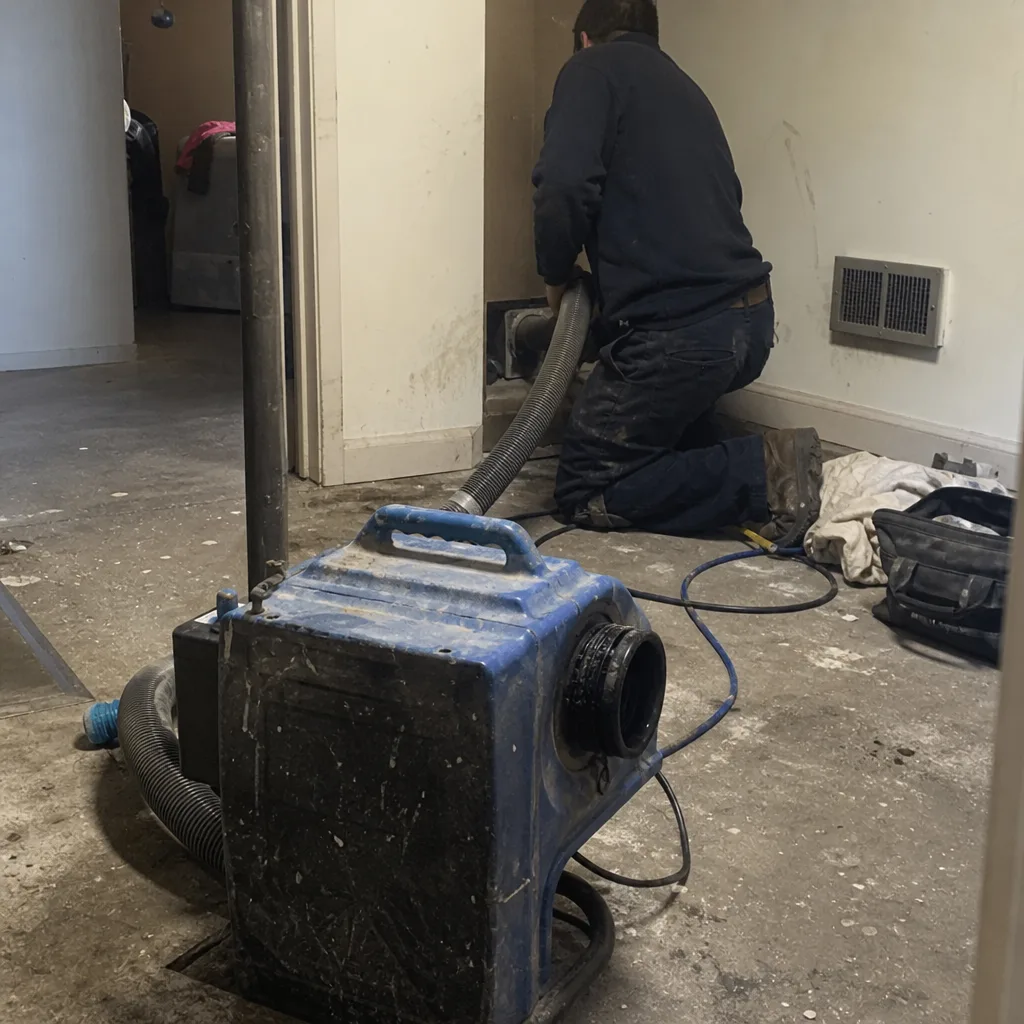 Before
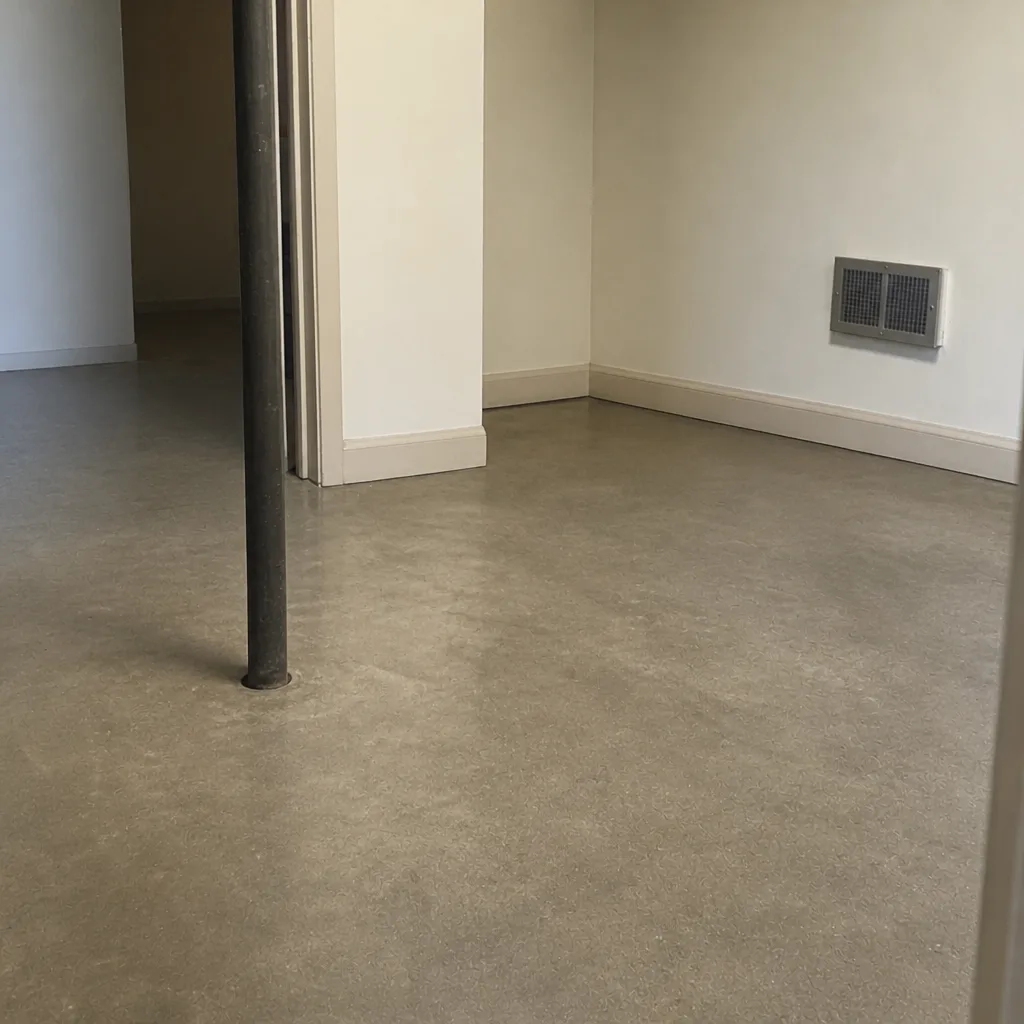 After
When to Call a Professional
Call us when a check turns up something you can’t resolve with a filter change. That means visible dust blowing from registers after a filter swap, a loading rate that’s speeding up month over month, visible joint failures you can’t reach safely, musty smells that reoccur, or a system that’s been idle for years. Any post-renovation situation also calls for a professional pass, since drywall and wood dust settles deep into the duct path and keeps circulating for months. Asthma or allergy symptoms that get worse indoors deserve a professional assessment rather than an assumption. We also recommend a call if the last cleaning was done by a crew whose equipment you couldn’t name.
Pleasant Grove Air Duct Cleaning Pros offers free estimates in Pleasant Grove. Call (833) 513-8678. We answer 24/7. Fast dispatch from 7am to 7pm, Sunday through Friday.
Frequently Asked Questions
Most Pleasant Grove homes should plan a professional cleaning every one to two years, with annual checks recommended for homes with pets, allergy sufferers, recent renovations, or a lot of outdoor dust exposure. The right interval depends on your filter loading rate, the condition of your joints, and whether the system has any known leakage. Homes with well-sealed ducts and a stable filter rate can stretch to the two-year mark; homes with a faster rate should not.
Air duct cleaning for a typical Pleasant Grove home should be quoted as a whole-system price, not a per-vent rate, and you should agree to the price in writing before work starts. Ask for the quote to include inspection, sealing checks, and before-and-after photos. Any quote that relies on a coupon price to get in the door is a warning sign, because the real number gets negotiated on site once the crew is inside. Call (833) 513-8678 for an exact quote. Estimates are free.
Cheap quotes usually reflect a different job: no rotary brush contact on the duct walls, no containment filtration, and no joint inspection. A shop-vac pulled through a few vents will look clean at the grille and leave the layer of debris on the walls of the duct path. Our quotes reflect professional-grade equipment like Rotobrush and Nikro systems and Abatement Technologies containment, because that’s the standard a whole-system clean actually requires. Call (833) 513-8678 for a written estimate you can compare line by line.
Ask for before-and-after photos of your own ducts, taken at your own registers and at the plenum. Any professional crew should expect the question and answer it. Photos belong in your duct system log so the next visit has a visual baseline to compare against. If a crew can’t provide them, ask why before you pay. Call (833) 513-8678 for a free estimate that includes documentation.
Yes, and it’s why our checklist runs off Utah’s annual calendar rather than a generic one. Spring inversions concentrate pollutants close to the ground; summer wildfire smoke pushes fine particulate into outdoor air intakes; fall harvest winds bring a wave of fine dust; and furnace startup after summer idle blows whatever settled in the ducts into the house. Each of those events is a trigger to run a visual pass rather than wait for the annual interval. Call (833) 513-8678 if you want a professional pass after a heavy event. Estimates are free.
You can do the entire monthly and seasonal visual checklist yourself, and you should. The professional piece is the mechanical cleaning, joint inspection, and repair, which requires equipment you can’t improvise with a household vacuum. Split the work that way: you monitor, a professional cleans and repairs, and your log ties the two together. That’s the system that produces a real maintenance history. Call (833) 513-8678 for a free estimate on the professional side.
The Bottom Line
Your duct system tells you when something is going wrong, but it tells you backward: filter loading, register dust, joint failures, and system smells all appear after the root cause is already active. A checklist turns that backward signal into forward information, provided you work it consistently and write down what you see. Run the monthly visual pass, watch the seasonal triggers, log every finding, and keep the professional cleaning and inspection on a real interval. That’s the maintenance protocol that catches early warning conditions in Pleasant Grove before they become expensive. Call (833) 513-8678. We answer 24/7. Fast dispatch from 7am to 7pm, Sunday through Friday.
Written by the team at Pleasant Grove Air Duct Cleaning Pros.