
Last updated November 23, 2026
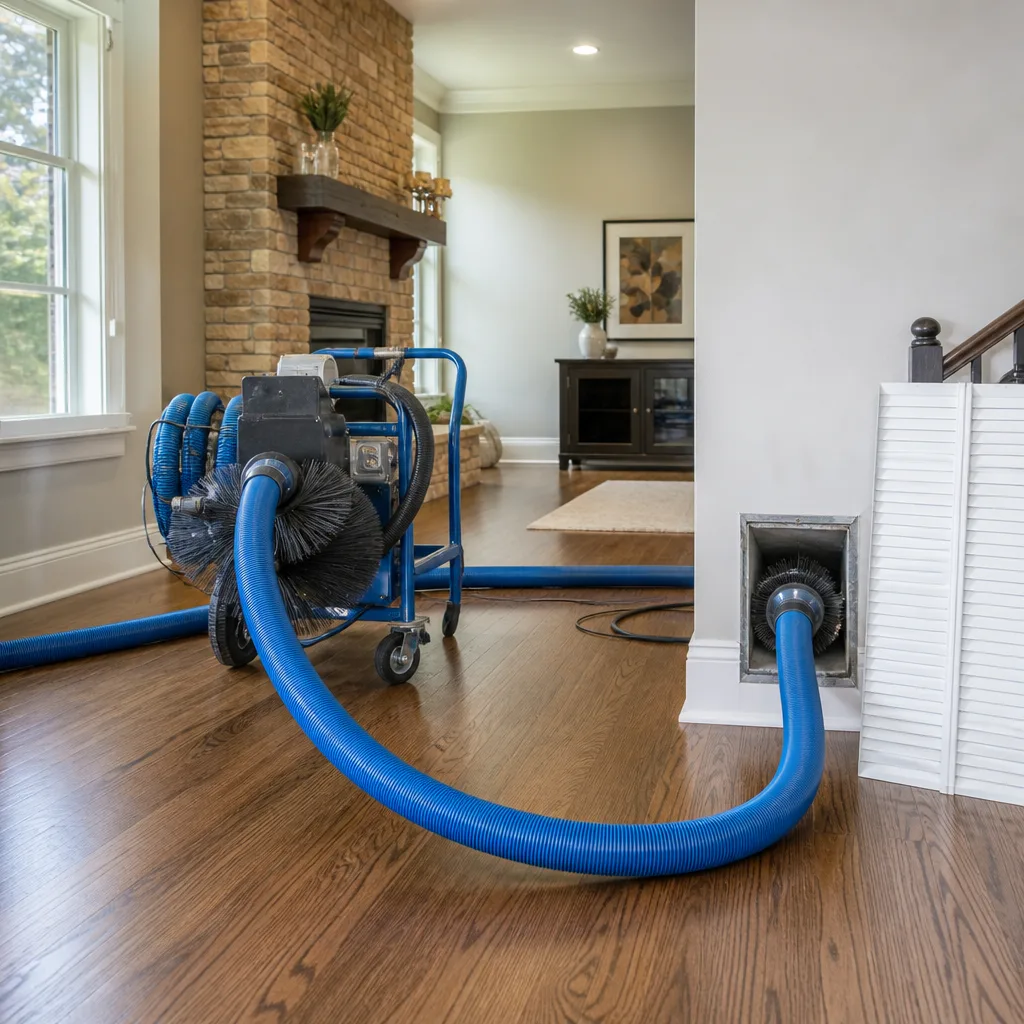 Whole-home duct cleaning
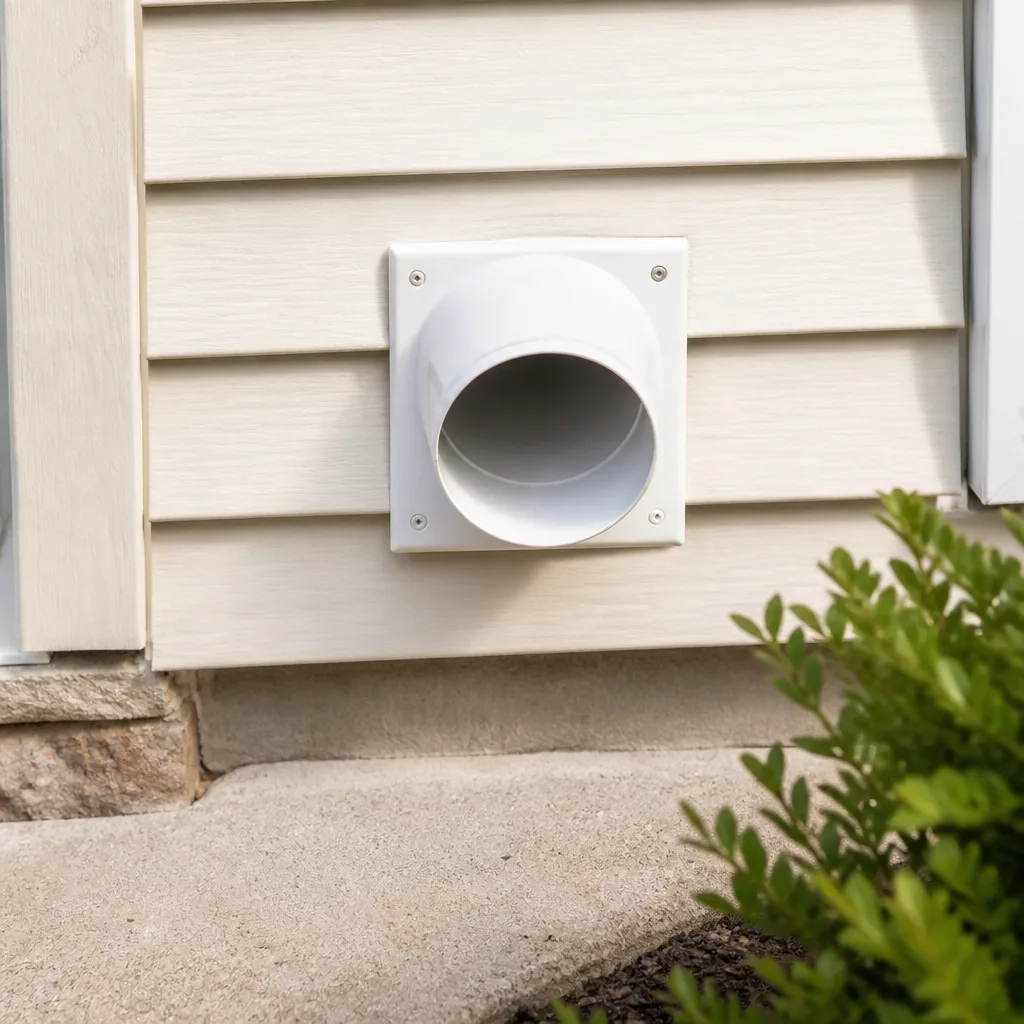 Dryer vent cleaning
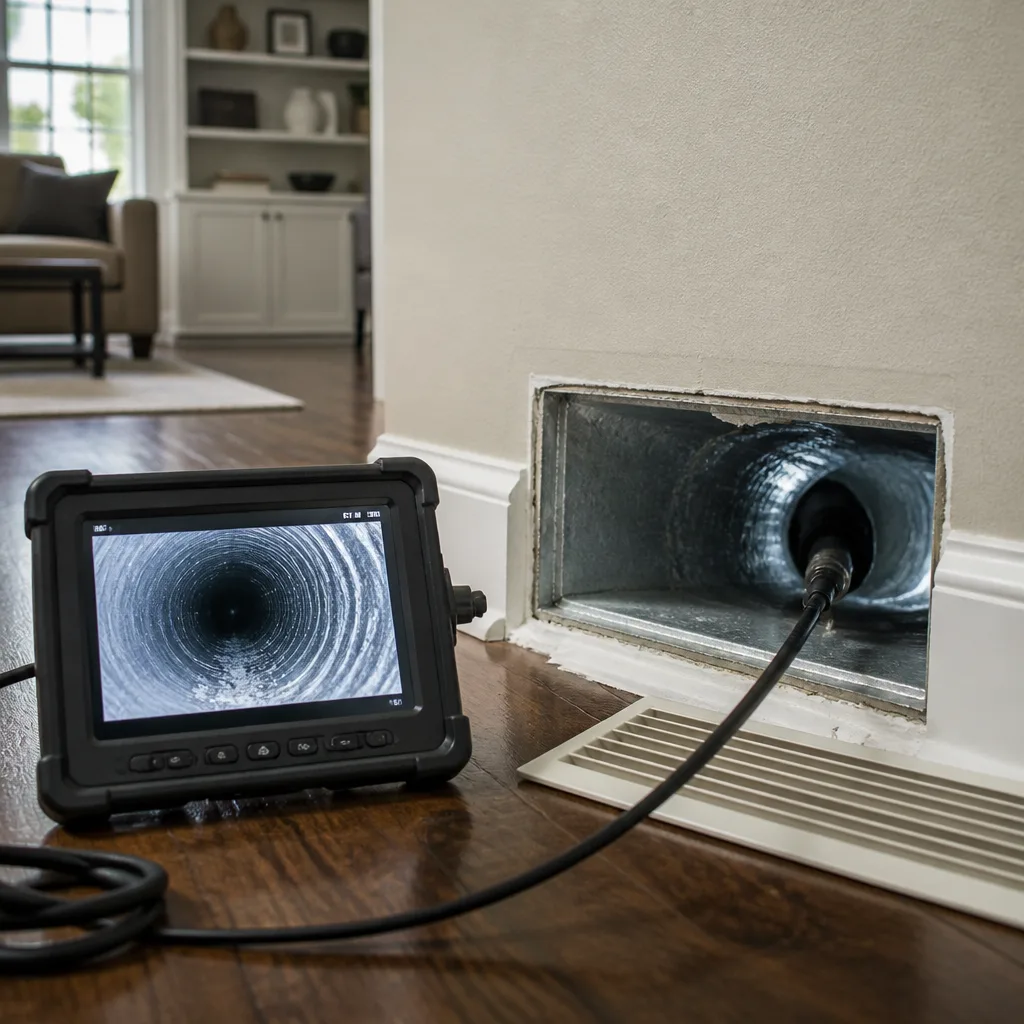 Camera inspection
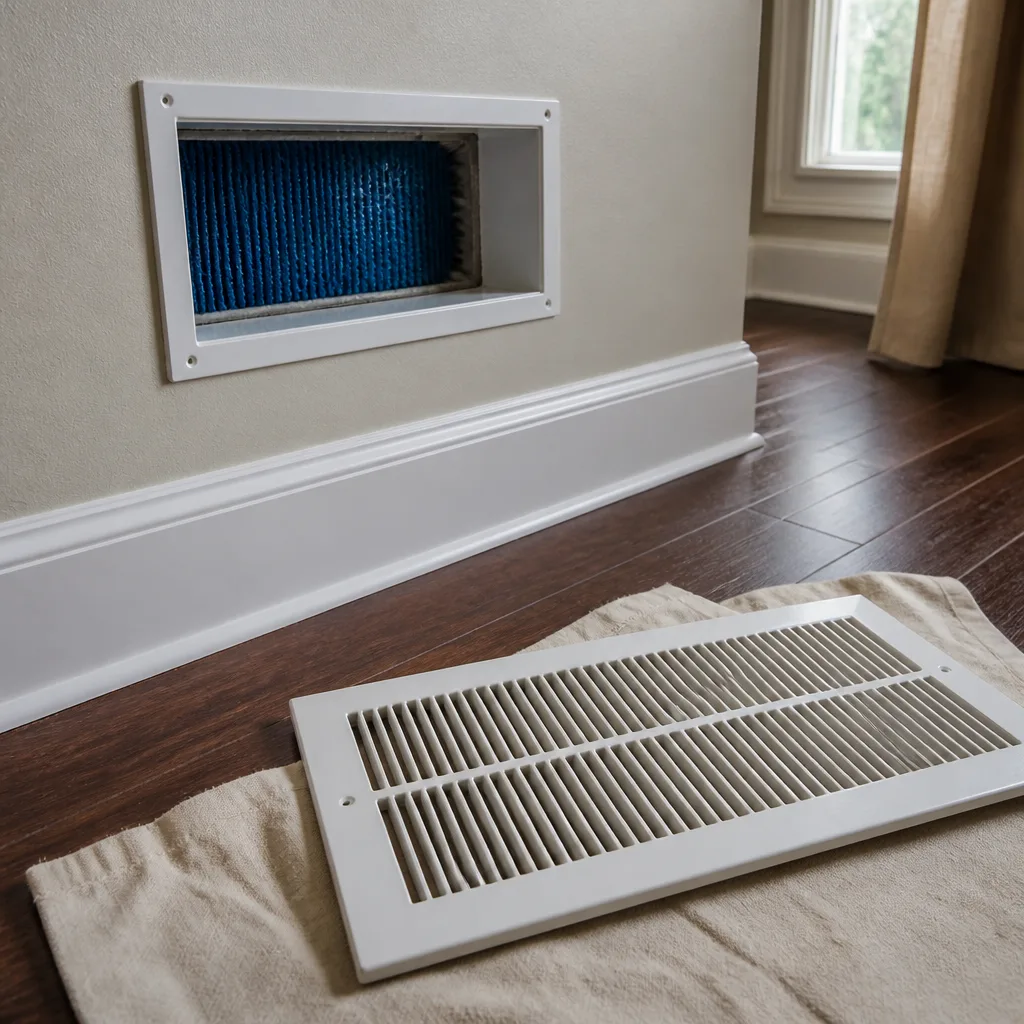 Sanitizing & deodorizing
Whole-system duct and dryer vent check with before-and-after photos - you see exactly what came out of your vents
That "$99 whole-house special" is a bait ad - the real number appears once they are in your hallway, or the "clean" is a shop-vac at the register. We photograph the inside of your ducts before and after instead.
DIY vs Professional Air Duct Cleaning: The Pleasant Grove Homeowner’s Decision Guide
Most advice about duct cleaning focuses on effort or money. The real dividing line is physics. A consumer-grade shop vac pulls roughly 1 to 2 inches of water column of negative pressure. Professional duct cleaning equipment pulls 1 to 2 inches of mercury, which is about 13 times greater. That gap decides whether debris leaves your ductwork or just gets stirred around inside it. In this guide we’ll explain what DIY duct cleaning can honestly accomplish, where it backfires, which Pleasant Grove homes are most at risk, and how to judge whether a professional quote is worth it for your specific system.
Quick Answer
DIY duct cleaning can meaningfully handle surface work: vacuuming registers, wiping grilles, and maintaining a dryer vent. It cannot remove settled debris from inside the duct runs, because household vacuums don’t generate enough negative pressure to extract it, and rotary agitation is what loosens contamination in the first place. For a system with visible dust buildup, allergy concerns, or ducts older than the home’s last renovation, professional cleaning with source-removal equipment is the difference between cleaning and redistributing.
Styles & brands we work with
- Whole-home duct cleaning
- Dryer vent cleaning
- Camera inspection
- Sanitizing & deodorizing
Table of Contents
- Why Negative Pressure, Not Suction Feel, Decides the Outcome
- What You Can Legitimately Do Yourself
- When DIY Makes Professional Cleaning Harder and Pricier
- The Pleasant Grove Home Types Where DIY Backfires Most
- What Professional Equipment Actually Does Differently
- How to Judge Whether a Professional Quote Is Worth It
- Common Mistakes to Avoid
- When to Call a Professional
Why Negative Pressure, Not Suction Feel, Decides the Outcome
Duct cleaning isn’t sweeping. It’s extraction under controlled vacuum. The measure that matters is not how strong the suction feels at the end of a hose. It’s the sustained negative pressure the machine holds on the whole duct system while a brush or air whip disturbs the debris inside.
Here’s the practical difference. A shop vac moves a decent volume of air through a narrow hose, which feels impressive against your palm. But the instant you open the system to clean it, that vacuum is fighting the entire duct network, and the pressure collapses. Professional equipment is built to hold negative pressure across a sealed system while the technician agitates the duct walls. That’s why the industry benchmark, a rotary brush system like the Rotobrush, pairs a brush head with a high-volume vacuum rather than relying on suction alone.
Think about what’s actually inside a duct. Dust doesn’t sit loosely on the floor of the run. It clings to the walls, bonded by moisture from conditioned air, cooking and shower humidity, and the natural static of a metal duct. Removing it requires two actions at once: mechanical contact to break the bond, and enough vacuum to carry the loosened material out before it settles again. A household vacuum gives you one without the other.
- Agitation breaks debris off the duct wall. Brushes, air whips and rotary heads do this.
- Containment keeps what’s loosened from escaping into the room. Abatement Technologies-grade filtration and negative-pressure containment do this.
- Extraction removes the material from the system entirely. That requires pressure the average shop vac can’t hold on a full duct run.
When one of those three is missing, the result is displacement. Debris ends up in a different part of the system, or in your living room air, rather than in a collection bag. That’s the entire argument for professional equipment, and it has nothing to do with whether a homeowner is capable or handy.
What You Can Legitimately Do Yourself
We’re not going to tell you that every duct task requires a professional. Several don’t, and doing them yourself genuinely helps your system perform.
1. Clean your registers and return grilles
Pop the grille off the wall or floor, wash it in warm soapy water, dry it fully, and vacuum the boot opening behind it with a brush attachment. This removes the surface dust that builds up from room-side air and keeps it out of the ducts. It’s a fifteen-minute job per register and worth doing a few times a year, more often in Pleasant Grove’s dry, dusty spring months.
2. Inspect accessible flex duct for damage
If you have flex duct visible in a basement or utility space, look at it with a flashlight. You’re checking for crushed sections, kinked runs, torn outer jackets, or sagging between supports. Note anything you see; these are the problems a professional sealing and repair visit addresses. Don’t try to re-stretch or re-tape a duct you can’t reach without strain.
3. Maintain your dryer vent
This is the DIY task with the clearest safety payoff. Dryer vent lint is a leading cause of residential fires. Pull the dryer out, disconnect the vent, and clear the run from the dryer outlet to the exterior wall cap with a vent brush. Check that the exterior flap opens freely. If the run is long, has multiple elbows, or you can’t reach the cap, that’s a job for dryer vent cleaning rather than a stuck brush.
4. Change your filter on schedule
A clean filter keeps dust out of the ducts to begin with. Check it monthly during heavy-use months and replace it when it looks loaded. This is the single cheapest thing you can do for indoor air quality, and it costs no more than the filter itself.
What you should not do: run a shop vac into a register and call it duct cleaning. That’s where the physics from the previous section catches up with you.
When DIY Makes Professional Cleaning Harder and Pricier
Here’s the part most homeowners don’t hear until after they’ve tried it. A botched DIY attempt can genuinely raise the cost of the eventual professional visit. Not because a technician is penalizing you, but because the system is now in worse shape than it would have been.
Pushing debris deeper into the main trunks
When you vacuum a register with a household machine, the pressure drop at the far end of the run pulls air toward you, but not enough to lift settled debris from the main trunk lines. What often happens is that loosened material from the branch gets pulled into the main trunk and stays there. Cleaning a main trunk requires equipment that can reach it with sufficient pressure and agitation. So a job that might have been a straightforward branch and trunk clean becomes a deeper extraction.
Damaging flex duct liner
Flex duct is a thin, foil-faced sleeve with an internal wire helix. A vacuum head pressed against it can collapse the liner, tear the vapor barrier, or pull the insulation loose from the wire. Once that happens, the duct leaks conditioned air and needs repair or replacement. We’ve seen this more often than you’d expect, and it’s why air duct cleaning done professionally includes a visual inspection of flex runs before cleaning.
Disturbing biological growth without containment
If there’s any sign of mold or microbial growth in a duct, agitating it without negative-pressure containment sends spores into the living space. That’s worse than leaving it alone. Biological growth is a containment-required situation, which is exactly the standard our Abatement Technologies equipment is designed for.
Losing the diagnostic record
A professional cleaning starts with a camera inspection and ends with before-and-after photos of your own ducts. A DIY attempt leaves you without that record, so you can’t tell how bad the contamination actually was or whether it was fully addressed.
The Pleasant Grove Home Types Where DIY Backfires Most
Pleasant Grove has a mix of housing stock, and some of it is much less forgiving of a homeowner with a shop vac than others. Three patterns stand out in our experience.
Older homes with deteriorating duct liner
Homes built in earlier decades, before flex duct was standard, often have duct board or internally lined metal runs. That liner degrades with age and heat cycling, and what’s left is a rough, friable surface that traps debris. A shop vac head can pull chunks of degrading liner loose, and once the liner is compromised, sealing and repair become necessary before cleaning is even useful. Duct sealing is a service we handle for exactly this reason.
Crawlspace systems
Many Pleasant Grove homes route ductwork through a crawlspace. That environment is dustier, more humid, and more prone to pest intrusion than an attic run. Ducts in crawlspaces are also harder to reach for inspection, which means contamination can accumulate for years before anyone notices. Those systems benefit most from professional equipment that can hold negative pressure across a long, exposed run.
Homes with previous rodent activity
This one matters. Rodent activity inside ductwork leaves behind droppings, nesting material, and potential contamination that needs to be handled with containment and sanitizing, not a handheld vacuum. Disturbing rodent contamination without proper filtration and containment is a genuine health concern. It’s also the scenario where skipping professional service is least justifiable. Sanitizing after cleaning is a separate, deliberate step, and it’s part of our air quality scope for that reason.
What Professional Equipment Actually Does Differently
We name our equipment because it’s the honest basis for the recommendation. When we say professional cleaning removes debris instead of moving it, the machinery is the reason.
- Rotobrush rotary brush systems agitate the duct walls with a rotating brush head while a high-volume vacuum pulls loosened material out at the same time. That simultaneous agitation and extraction is the industry benchmark for contact-based cleaning, and it’s the reason a single pass can achieve what a shop vac can’t in any number of passes.
- Nikro industrial vacuums are rated for professional duct remediation. They hold negative pressure on a sealed system rather than relenting the moment the run opens up, which is what matters on main trunks and long branch lines.
- Abatement Technologies filtration and containment is the same standard used in mold and restoration work. It’s what keeps dust and microbial material from escaping into your living space while we’re working.
- Honeywell components and filters installed during or after cleaning let us improve filtration on the system itself, not just the ducts.
We don’t put this list here to impress you. We put it here so you can ask any contractor you’re considering the same questions: What equipment do you run? What negative pressure do you hold? Do you use containment? Is there a camera inspection and photo record? If the answers are vague, keep looking.
Our technicians have up to 9 years of experience, and the same team performs cleaning, repair, and sanitizing in a single visit, which is why we call it HVAC cleaning when the scope includes the air handler and coil alongside the ducts. The system is one pathway, and cleaning it piecemeal leaves contamination behind.
How to Judge Whether a Professional Quote Is Worth It
A professional quote is worth it when the contamination level, the system’s condition, or your household’s health circumstances justify the cost. Here’s how to weigh those three factors together.
- System age and history. A home that’s been through renovation, has never had its ducts cleaned, or has visible dust staining around registers is a candidate. A newer home with a clean filter history and no symptoms can wait.
- Contamination level. Look for dust plumes from registers when the system starts, visible debris inside a register boot, or staining around grilles. If you can see the problem from the room side, the duct side is worse.
- Household health factors. Allergies, asthma, or a new baby in the house raise the stakes. So does a recent purchase of an older home with unknown duct history. In those cases the DIY route doesn’t just underperform; it can add to the indoor air problem.
- Scope in the quote. A legitimate quote covers the whole pathway: branches, trunks, air handler, and registers, plus a camera inspection and before-and-after photos. A quote that only mentions vents is a red flag.
- Flat pricing. Ask for one flat price for the full system, agreed before work starts. Watch for per-vent pricing models, which encourage the contractor to sell the price up on-site.
One honest note on cost comparison. A professional full-system clean with source-removal equipment is priced higher than a coupon service, and it’s not the same job. When a quote is dramatically cheaper than competitors, the typical explanation is a shop-vac setup without containment or agitation, which brings us back to the physics at the top of this guide. We can’t quote you a price here because the estimate depends on your system, and we won’t invent a number.
Common Mistakes to Avoid
- Vacuuming a register with a shop vac and calling it cleaning. This loosens surface dust but doesn’t extract it, and the loosened material often ends up deeper in the trunk. You’re moving the problem, not solving it.
- Damaging flex duct with a hard vacuum head. Flex liner tears easily. If you can’t inspect a run before touching it, don’t touch it. That’s a good use of a professional inspection.
- Disturbing mold or rodent contamination without containment. Agitating biological material with an open vacuum sends it into the air you breathe. This is a stop-and-call situation, every time.
- Skipping the air handler. Cleaning the ducts but not the coil and cabinet leaves contamination in place downstream. That’s why HVAC cleaning is a separate service and not an upsell.
- Ignoring the dryer vent until lint is visible. Lint accumulates quietly. If you can see it at the exterior cap, the run is overdue. This is the highest-priority DIY-to-professional handoff in the whole category.
- Choosing a quote on price alone. The equipment and scope are what determine whether the work is real. Ask what machinery is used and whether there’s a photo record.
- Doing a partial DIY clean before a scheduled professional visit. If you already have an appointment, let the technician see the system in its pre-cleaning state. It makes the before-and-after comparison honest and the cleaning more effective.
When to Call a Professional
Call a professional in any of these situations: visible dust or debris inside registers, dust plumes when the system starts, new or worsening allergies in the household, a recent move into an older home, a recent renovation that disturbed drywall or insulation, known rodent activity in the ductwork, or any sign of mold or microbial growth. Also call if your dryer vent can’t be cleared with a brush because of length or elbows, and if your ducts predate flex construction and you’re unsure of the liner’s condition.
Pleasant Grove Air Duct Cleaning Pros offers free estimates in Pleasant Grove. Call (833) 513-8678. We answer 24/7. Fast dispatch from 7am to 7pm, Sunday through Friday. The written estimate sets the final price, and we provide before-and-after photos of your own ducts so you can see the result.
See the difference
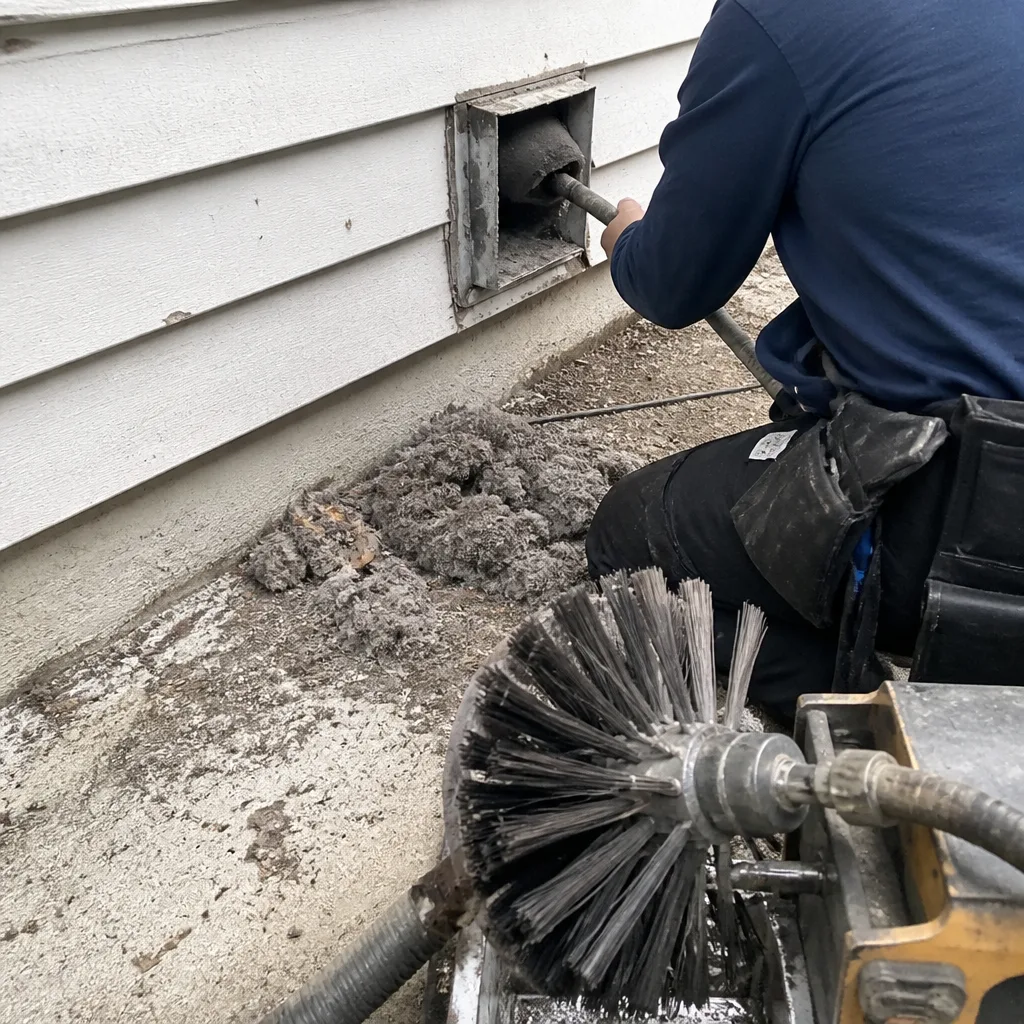 Before
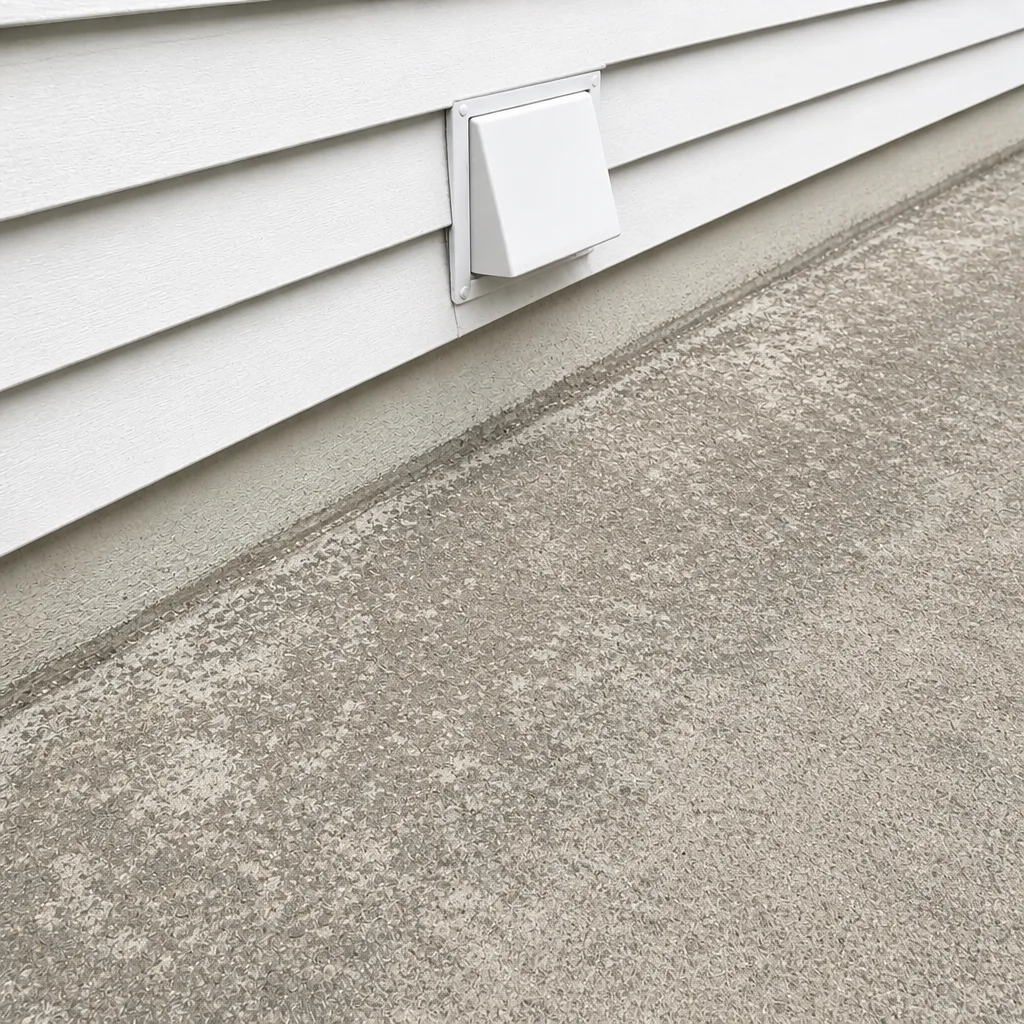 After
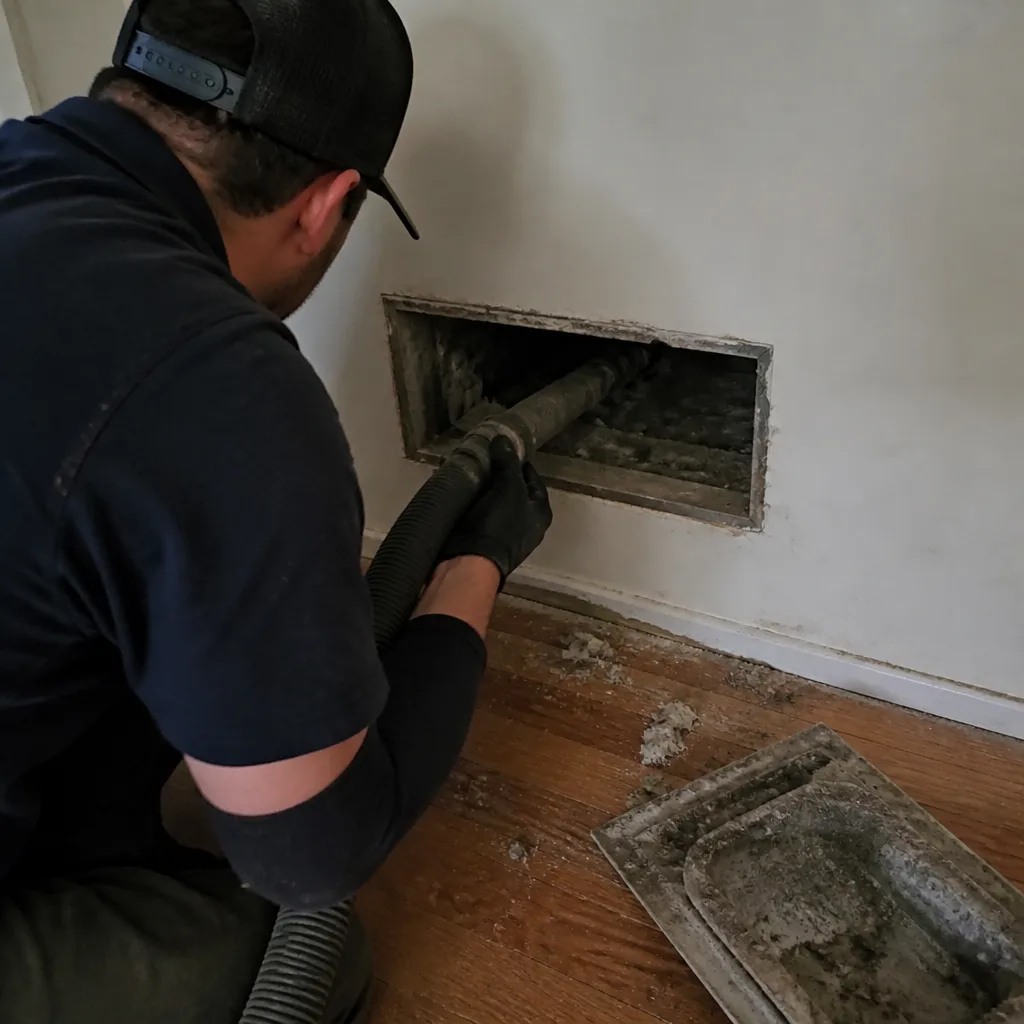 Before
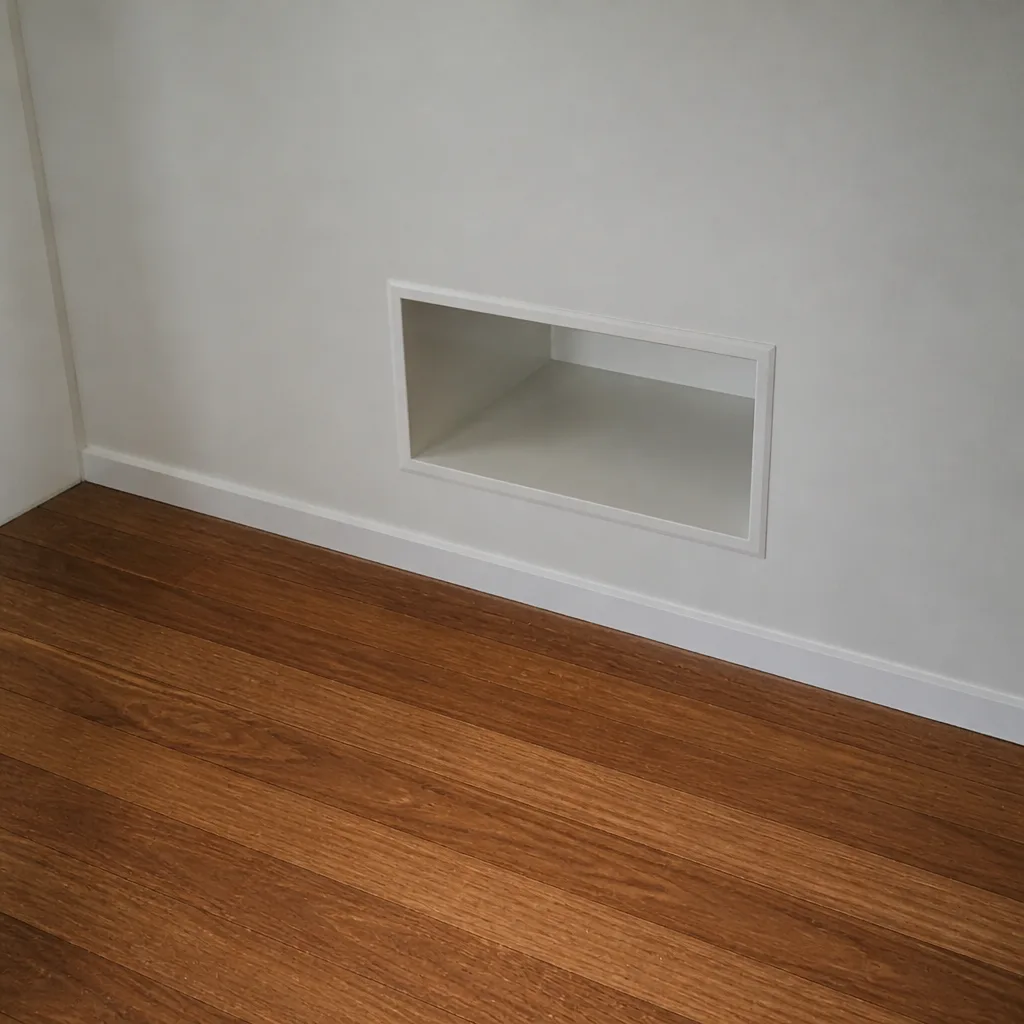 After
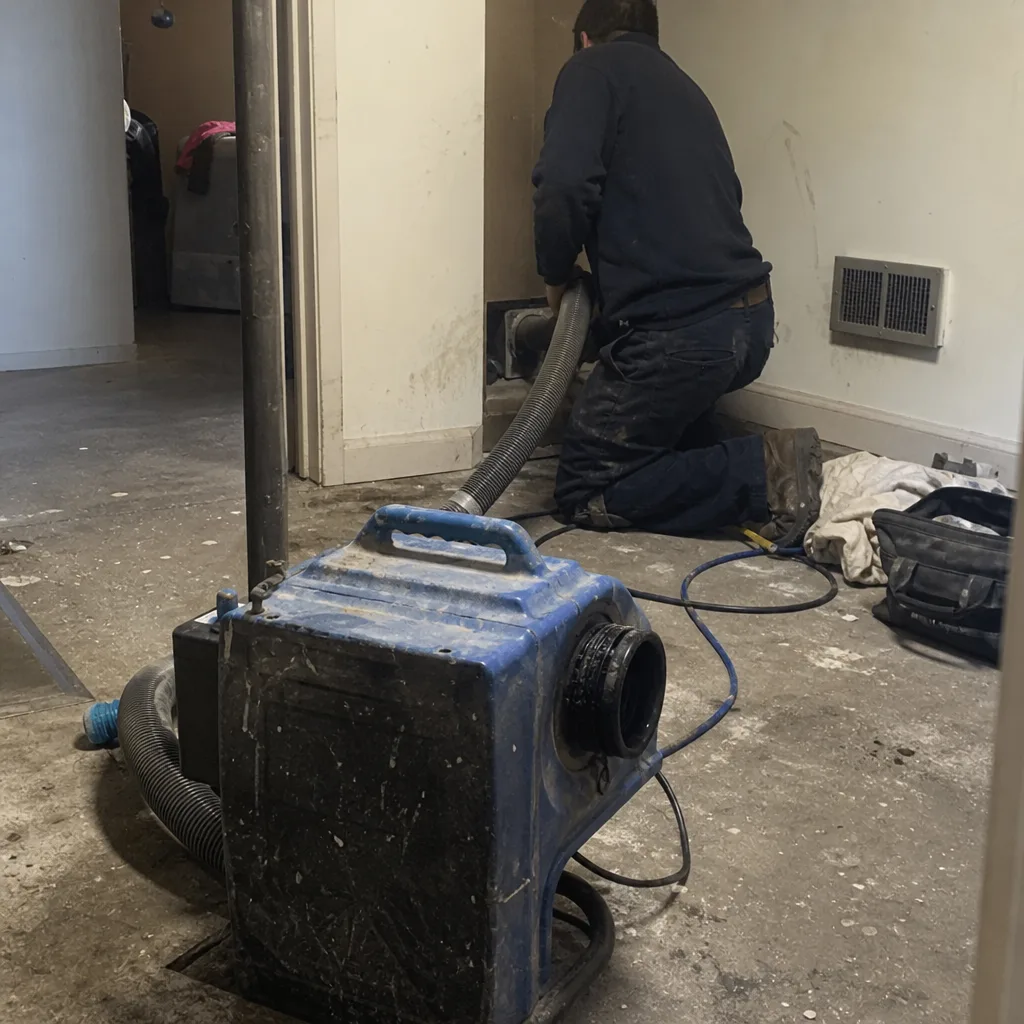 Before
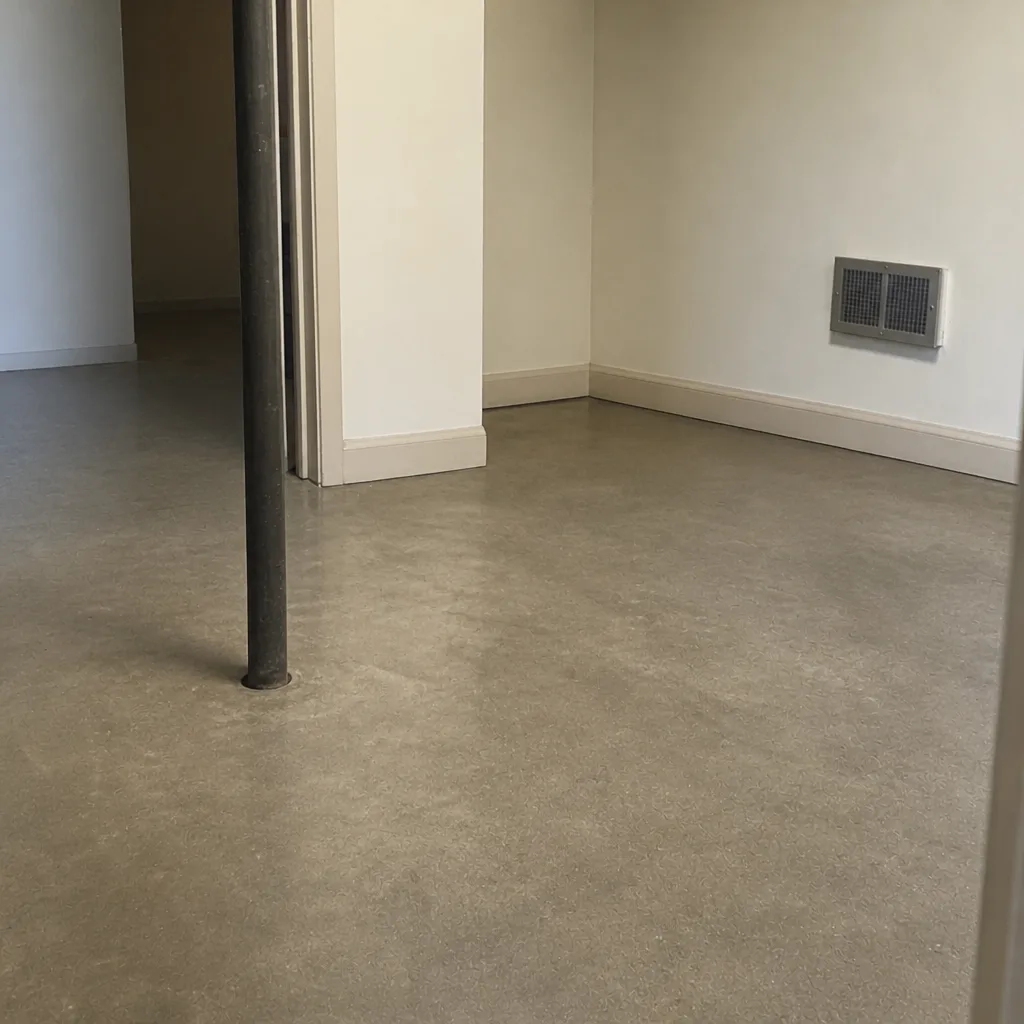 After
Frequently Asked Questions
A shop vac cannot hold enough negative pressure across a duct system to extract settled debris from the runs. A consumer-grade vacuum operates at roughly 1 to 2 inches of water column, while professional equipment holds 1 to 2 inches of mercury, about 13 times greater. A shop vac can handle surface grilles and registers, but not the duct interior.
Pricing depends on your system’s size, configuration, and contamination level, so we don’t publish a flat number and we don’t want to invent one. What we do commit to is one flat price for the full system, agreed before work starts, with no per-vent pricing. Call (833) 513-8678 for a free estimate and a written quote based on your specific system.
Often yes, and more so than a newer home, because older duct liner degrades and traps debris in a way newer flex runs don’t. If your home is of an age where the ducts predate modern flex construction, or if it has a crawlspace run, a professional inspection and cleaning is the more reliable choice. Our technicians have up to 9 years of experience and can assess liner condition during the visit.
There’s no fixed interval that fits every home. Most guidelines suggest every few years for a typical household, more often with pets, allergies, recent renovation, or a dusty environment. In Pleasant Grove’s dry spring season, homes that leave windows open regularly tend to load their ducts faster. The honest answer is based on your filter history and what you can see at the registers.
Cheap quotes usually reflect a shop-vac setup without containment or agitation equipment, which means the work doesn’t remove settled debris from the ducts. When you compare quotes, ask what equipment will be used and whether the technician provides a camera inspection and before-and-after photos. If a quote skips those, the lower price reflects a smaller job.
Ask for before-and-after photos of your own ducts, taken during the visit, along with a visual inspection of the air handler and registers. A professional job leaves a record you can review. A clean you can’t verify is hard to distinguish from a clean that never happened. Call (833) 513-8678 to schedule a visible, documented clean.
The Bottom Line
The DIY vs. professional question for duct cleaning comes down to whether your equipment can extract debris from the duct interior or only move it around. Surface tasks like register cleaning, filter changes, and dryer vent maintenance belong on your own list, and they genuinely help. Anything involving the duct runs, main trunks, the air handler, or biological contamination belongs with professional equipment that holds negative pressure, agitates the duct walls, and contains what’s loosened. In Pleasant Grove, crawlspace systems and older homes make that distinction especially worth respecting. When in doubt, get a written estimate and compare scope, not just price.
Call (833) 513-8678. We answer 24/7. Fast dispatch from 7am to 7pm, Sunday through Friday. One flat price per system, agreed before work starts, with before-and-after photos of your own ducts.
Written by the team at Pleasant Grove Air Duct Cleaning Pros.